
------
Would you or someone you know like to go on a songwriting retreat with industry professionals? Visit SongbirdCamp.com for more details!

 , by Neil Senturia). Like entrepreneurship, it's hard to teach someone to be a great songwriter.
 When it comes to songwriting, I think it's essential to at least understand the "who, what, when, where, why and how" of creating. The way we each answer these questions should give us a clearer understanding of the process and purpose of our creativity. Let's begin with "who."
  A co-write is a process in which two or more songwriters collaborate on writing a song. Generally, each writer gets an equal amount of credit for their effort (2 people, 50% each; 3 people, 33% each, etc.).
 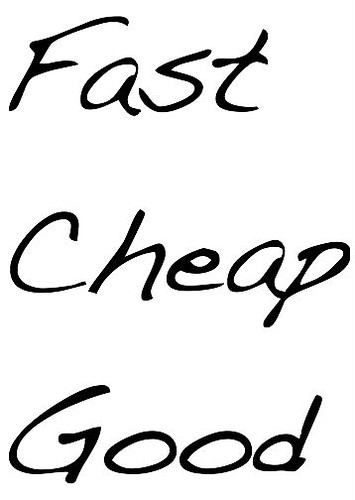 1. Fast/Cheap
 From my experience, here are some aspects of what a publisher does:
 1. Pays a salary in the form of an advance, allowing me to not have to work another jobAs a songwriter, you aren’t necessarily trying to prove to a publisher that you have written the best song in the world, rather that you have all the potential to write the best song in the world. It’s as if the beginning songwriter is a young apple tree and, though it may not provide the best fruit quite yet, with the proper care and growth it can soon produce bountifully.
2. Provides valuable feedback on songs
3. Sets up co-writes
4. Takes care of legal copyright registration
5. Fronts the money for demo sessions
6. Acts as a communication buffer
7. Validates a songwriter as a professional
8. Provides a space for co-writing
 Between the songwriter’s pen to the listener’s ear, there are a handful of steps that the song must take along the business path. Here is a basic estimated unfolding of events in the journey of a song once it is written (with estimated length of time in parentheses):
1. Song is turned into publisher
2. Song is demoed (three months later)
3. Publisher pitches song to artists/labels/managers around town (six months)
4. Artist decides to record song (three months)
5. Album gets mixed and label promotes upcoming release (six months)
6. Album is release, and publisher and songwriter look forward to royalties (six-nine months)

1. It's free
2. It's fast (you open the program and hit record, as opposed to setting up a Pro-Tools-like session in GarageBand)
3. You can compress and normalize any selected area
4. You can bounce (turn a portion of the recording into a stand-alone mp3 or wav file to import into iTunes) any area

