Showing posts with label Recording. Show all posts

Monday, May 21, 2012

Auralex to the Rescue!

As some of you may know, my wife and I are expecting our first kid in June. It became clear pretty quickly that, as our second bedroom, my writing/recording room was to become the nursery. Thankfully, we had some space in our basement that showed potential for becoming a devoted space for creating music.

There was really only one main problem: with concrete/plaster walls, the room basically acted as a rectangular reverb chamber. It was obvious that something needed to be done to address the acoustic situation. This is where Auralex came in.

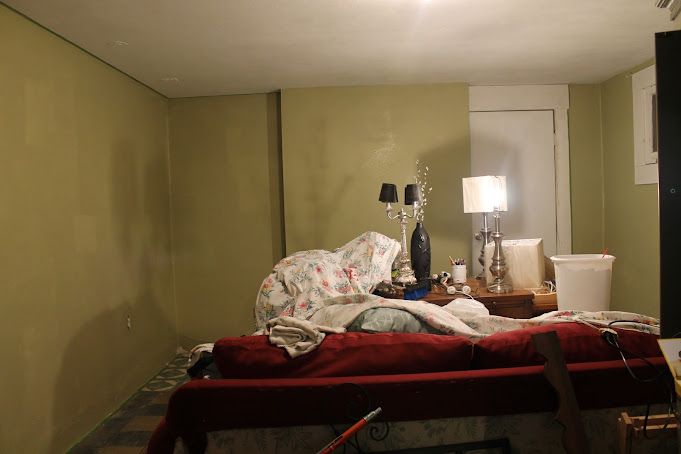
Here are some pictures of the basement room before I brought in my recording equipment:


We decided to start by repainting the walls a more vibey green color (these pics were taken while the paint was still drying):


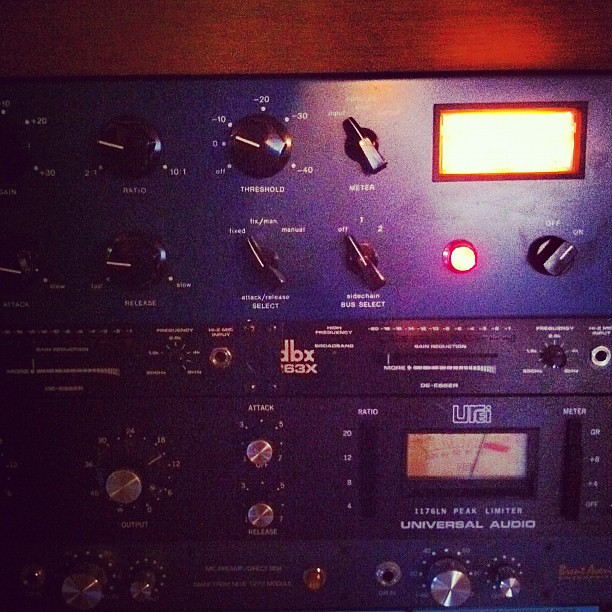
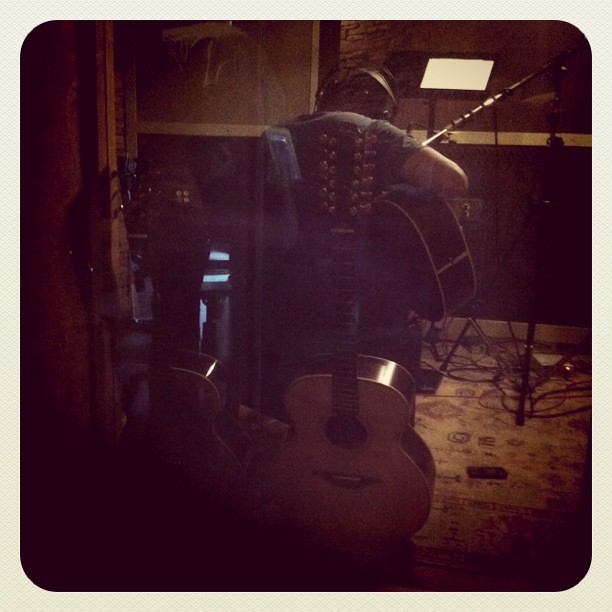
Here's where the Auralex came in, along with my recording setup:

My new man cave!

My co-writer's seat

The vocal booth, enclosed by movable Auralex ProMAX panels

The Mopads were the perfect thing to separate the monitors from the stands, isolating the vibrations

I suspended the foam from the ceilings with these gold hooks

Eric Smith from Auralex

Not only does the new setup look cool, it actually encourages creativity. I've been told that it's easier to focus when there are less rogue sound waves bouncing around the room, and I've experienced that to be true. I've never heard the stereo image like I have in the past couple months. My mixes are improving, and I'm enjoying listening to music more now than I have in the past couple years. 

The room's acoustics are so tight now that, one day, I noticed what sounded like a static problem in my left monitor only to discover that I was actually hearing a candle burning on my desk. That's a good sign of an accurate acoustic environment!

If you have a dedicated space for writing/recording, I highly encourage you to invest in the room's acoustic treatment. If you can't accurately hear what's coming out of the monitors, you'll have trouble competing with those who have a proper setup. Check out Auralex.com for ways that you can turn your room into a space that serves your creativity. Treat yourself to proper acoustic treatment!

Keep writing (a treating acoustics), 
Ben


Friday, March 16, 2012

Avoiding Distortion

Back when tape machines were the main way to record audio, it was important to get as loud of a volume to tape so that the signal to noise ratio would be as high as possible. There was a little thing called "hiss" that wasn't the most pleasant thing to hear in a song. When it comes to digital recording, it's now possible to raise the volume gain within software without adding noise to the track. This being said, the last thing we need to try to do when recording is have the volume level right up to the edge of distortion. With tape, a little distortion sort of sounded cool (ie, "Ain't No Mountain High Enough"). But digital distortion doesn't really have much artistic value. 

Just make sure you're not maxing out the input level and causing distortion on the track. If you have an undistorted recording that's pretty well in time and in pitch, you can always have someone else help mix it later on.

Keep writing (and recording),

Ben

------

Would you or someone you know like to go on a songwriting retreat with industry professionals? Visit SongbirdCamp.com for more details!

Wednesday, March 7, 2012

Jonsi - "Go"

One of my favorite artists as of late:


------

Would you or someone you know like to go on a songwriting retreat with industry professionals? Visit SongbirdCamp.com for more details!

Tuesday, February 28, 2012

Why Recording Matters

One of the realities of the music industry is that you can't rely on anyone else's imagination to fill in any recording quality deficiencies. As some would say, you almost have to spoon feed your song to the listener.

Consider this scenario: you have written a great song and used GarageBand or your cell phone to record a rough work tape. You march into a publisher's office and tell them you've created the best thing since sliced bread. They turn the speakers up, hit "play", then hit "stop" 30 seconds in. They didn't even make it to the chorus. Instead, they take out your CD and pop in a song from another writer that they're excited about. What comes through the speakers may sound better to the ears, due to the fact that the song was recorded well in ProTools or Logic. But deep down you know that your song was better than the one the publisher enjoys listening to.

How do you avoid a scenario like the one above, where a worse song gets attention because it sounds better? Focus on getting a great, clean home recording. If you track even just a piano/guitar and vocal well, you could even use those recordings as the foundation for a full-band track.

If you're interested in taking the next step in setting up your home studio, I would highly recommend picking up a copy of Mike Senior's Mixing Secrets for the Small Studio. It has helped me take very practical steps in improving my own setup, and I'm sure you would benefit as well.
Keep writing,
Ben


------

Would you or someone you know like to go on a songwriting retreat with industry professionals? Visit SongbirdCamp.com for more details!

Friday, February 3, 2012

New Solo Discovered on "Here Comes the Sun"

It's not often you get to hear anything new from The Beatles, so this is definitely a treat!


------

Would you or someone you know like to go on a songwriting retreat with industry professionals? Visit SongbirdCamp.com for more details!

Thursday, January 26, 2012

The Elephant in the Room

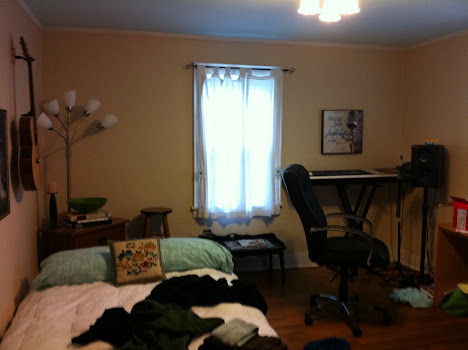
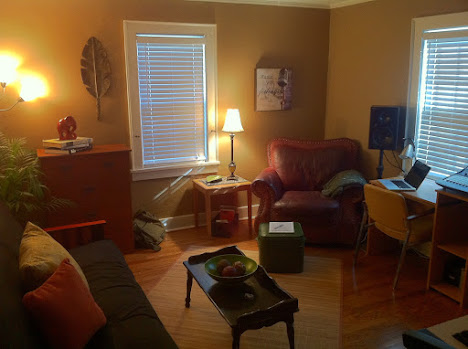
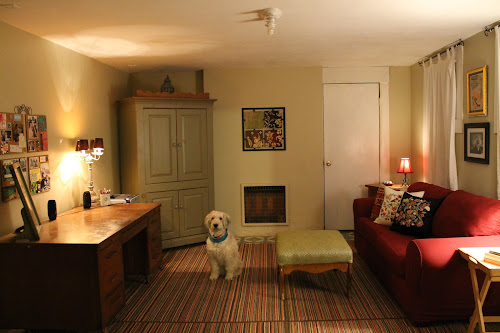
My wife and I are about 19 weeks along, expecting our first kid in June. We are incredibly excited and I'm actually looking forward to those sleepless nights. Soon after we found out we were expecting, my wife and I both knew we were going to have to discuss the elephant in the room. In our case, the elephant is my writing/recording/mixing setup and the room is our soon-to-be nursery.

One thing I'm really excited about is the fact that, for the first time, I'll have a dedicated room that's a creative space first, guest room second. When we moved into our house, this is what our guest room looked like (it used to be a little girl's room):


Then, with a little paint, new blinds and a few decorations, we ended up with this:


With the migration south into the basement, here is the room I'll be working with:


So far, we've painted the walls and have begun transitioning some of my gear to the new room:


The next step is treating the acoustics of the room. I'll keep you all up to date with the progress over the coming weeks!

Keep writing,

Ben

------

Would you or someone you know like to go on a songwriting retreat with industry professionals? Visit SongbirdCamp.com for more details!

Tuesday, January 3, 2012

Makeshift Vocal Booth

While home for Christmas, we put together this little recording setup to track our British friend Paula reading a poem for a kids album/book we are currently working on.

(Recording hint: one of the best spaces to record is in front of a bookshelf. The different sizes and surfaces of the books help diffuse the sound reflections.)

This is Brittany testing out the rig:


------

Would you or someone you know like to go on a songwriting retreat with industry professionals? Visit SongbirdCamp.com for more details!

Thursday, December 22, 2011

Ho-ho-ho-verdubs


------

Would you or someone you know like to go on a songwriting retreat with industry professionals? Visit SongbirdCamp.com for more details!

Friday, December 2, 2011

Quote of the Day - da Vinci

“Art is never finished, only abandoned.”

- Leonardo da Vinci


------

Would you or someone you know like to go on a songwriting retreat with industry professionals? Visit SongbirdCamp.com for more details!

Friday, May 6, 2011

The Life of a Song (Part 3 of 6)

On the business side, there are six steps in the life of a song. I've decided to break it down into six posts.

Here's a basic unfolding of events (with estimated length of time in parentheses):

1. Song is written and turned into publisher
2. Song is demoed (three months after it is written)
3. Publisher pitches song to artists/labels/managers around town (six months)
4. Artist decides to record song (three months)
5. Album gets mixed and label promotes upcoming release (six months)
6. Album is release, and publisher and songwriter look forward to royalties (six-nine months)

Here are some basic general levels of approval that a song has to go through before it could be heard on the radio consistently:

Radio Star...
Photo by Fod Tzellos. Used with permission.
           1. The songwriter(s)
2. The publisher(s)
3. The artist’s manager(s)
4. The record label
5. The artist(s)
6. The promotion team
7. The radio DJ(s)
8. The listener(s)
I believe the most important step is the first one. If we don't write something that we believe in, then why should we expect someone else believe it?

Keep writing,

Ben

------

Would you or someone you know like to go on a songwriting retreat with industry professionals? Visit SongbirdCamp.com for more details!

Sunday, January 30, 2011

Fast - Cheap - Good: Pick Two

Here's a marketing tool that I've found helpful: in any given project, a product can be fast, cheap, and/or good. But it can only be two of the three. Let's look at this through the lens of a songwriter.

If you're interested in getting a song recorded, there are three scenarios:

Fast Cheap Good1. Fast/Cheap

There's an audio engineer friend who is looking for some recording experience. He said he'd record your song at his place if you buy him lunch. Fast and cheap, but what level of quality should be expected?

2. Cheap/Good

There's a family friend who has had success over the years recording well-known artists. As a favor, he offered you the opportunity to come into his studio when it's available to record some songs. He even said he'd be willing to mix them. It's no cost, and the quality is top-notch. But how long will it be before he has a free day to mix your song?

3. Fast/Good

There's a professional audio engineer in town who has gained a reputation for not only getting great-quality recordings, but mixing them the very next day. Nothing's better to a songwriter or publisher than getting a final mix so soon, but how much is that going to cost?

The best audio engineer of all is the one who makes you feel like you got a recording that was all three of the above: cheap, good and fast. It's your job to figure out which one of the three it's not!

Keep writing,

Ben

Saturday, January 8, 2011

Cliff Goldmacher - Before You Demo Your Song


Here are some very helpful tips from fellow songwriter Cliff Goldmacher about how to prepare for a demo recording session. It's essential to prepare so that the studio experience is fun and enjoyable instead of stressful. That way everyone is most capable of doing their best work!

Keep writing,

Ben

Friday, December 31, 2010

Writing Tools - Audacity


Audacity is the basic recording program that I use on a daily basis. These are the things I love about it:

1. It's free
2. It's fast (you open the program and hit record, as opposed to setting up a Pro-Tools-like session in GarageBand)
3. You can compress and normalize any selected area
4. You can bounce (turn a portion of the recording into a stand-alone mp3 or wav file to import into iTunes) any area

There are plenty of recording programs out there, but in my experience nothing has been as easy and helpful as Audacity.

Download it here for free.

Keep writing (and recording),

Ben

Monday, December 27, 2010

Writing Tools - a Writer's Friend

There are two sides of the writing process - the actual art being created, and the way we capture and portray that art. Both sides of this coin are necessary. For example, the most beautifully written concerto suffers greatly if it isn't given a proper performance and recording. And what good is a great recording if the song is only mediocre?

Though tools are important in the writing process, it is essential to remember where new art actually comes from: inspiration. I am confident this inspiration is not found in digital 1s and 0s as much as it is found in nature's leaves and raindrops. As wonderful as the newest and shiniest recording program or studio compressor is, it will never provide the fuel for a fresh new song in the same way that organic life does.

Jatropha hybrid - Leaf detail (129 DAS)
Photo by Ton Rulkens. Used with permission.
I believe our tendency is to look to these tools for salvation when we create, rather than to be on the lookout for true inspiration. The result can often (but not always) be heard on the radio - a sonic masterpiece that wouldn't stand up on its own when performed solo on guitar or piano. Our challenge when it comes to writing songs is to always remember that the inspiration and the tools with which we capture this inspiration are separate, yet connected. The metaphor that comes to mind is this:

Songwriter = conductor
Song = train
Writing tools = tracks
Inspiration = coal/fuel

In the coming weeks and months I am going to talk in more detail about the specific tools that I have found helpful in my own writing process. And please feel free to clue me in on the tools you find useful!

Keep writing,

Ben

Thursday, December 16, 2010

From the Writing Room to the Studio

I had someone ask me recently, "How does a song get from the writing room to the radio?" Well, the most important step in that process is the song's transition into the studio. In my experience, only about one in every 8-10 songs written makes it from the lower-quality GarageBand version to the full-band studio version.

Here's an example of a song that made the jump from the writing room to the studio:


          "Breakthrough" (Ben Cooper/Jenn Schott) ©2010

          Exhibit A - Writing room version, immediately after finishing the song (Jenn singing):


          Exhibit B - The full-band demo recording (artist Mallory Hope singing):


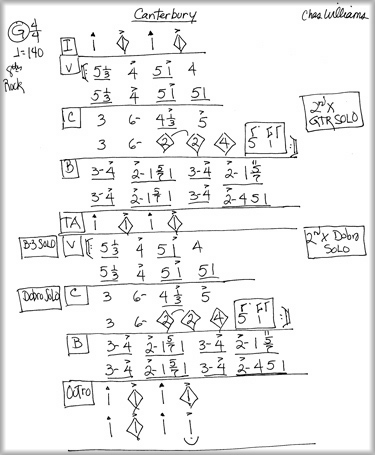
In the course of three hours (the length of each "session"), a band of musicians will usually record five songs. Broken down, that's a song every 40-45 minutes, at a quality that sounds like something you could hear on the radio. The way this proficiency is accomplished is by having the songs mapped out ahead of time by the session's lead musician (here is an example of a chart written using the Nashville Number System).

When the time comes to begin recording the next song on a session, the players all congregate in the mixing room to hear the songwriters' rough recording (Exhibit A). They follow along on the charted road map, jotting notes along the way. After hearing the song only one time, the players take their places in the soundproofed tracking room and run through the tune. Then after a little banter about who should take the solo and when and where each player should come in, they play through the song for the final pass (Exhibit B). Generally the final demo version of a song is literally only the second time these players have ever attempted the song! After the band's tracking session, a demo singer or artist will come in and overdub the final vocal, and the engineer will mix the songs, sometimes even the same day.

These session players and singers are some of the most talented individuals I have ever been around. I wish I could bring everyone into the studio on days that we are recording, because it is such an amazing process to see. I believe that the most "Nashville" thing that a tourist could ever experience is not walking down Broadway through honky-tonk bars, but rather sitting in a studio while a song comes to life before their ears. And this is an experience that I hope you are all able to have someday soon.

Keep writing,

Ben